Quick Answer
Cayman Islands Trust Formation means setting up a trust under Cayman law through a trustee licensed by CIMA, typically with a trust deed, source-of-wealth evidence, and full due diligence. The jurisdiction is tax-neutral, allows settlors to reserve certain powers, and offers STAR trusts for purposes as well as beneficiaries. Setup usually costs roughly KYD 4,200 to KYD 12,500 or more, with annual trustee fees on top, and protection works best when the trust is funded early and in good faith.
If you're researching Cayman Islands Trust Formation, you've probably noticed that the Cayman Islands are usually mentioned in the same breath as serious, institutional-grade wealth planning. That reputation is earned. The jurisdiction combines English common law, a respected regulator, and a deep bench of professional trustees, which is why wealthy families and sophisticated founders keep returning to it.
At Neptune Fiduciaries Group, I've worked with clients who assumed a Cayman trust was simply a more expensive version of any offshore trust. In practice, the structure offers specific tools, such as reserved powers for the settlor and the STAR trust regime, that are hard to find elsewhere.
This guide explains why families look to Cayman, what documents and approvals you need, how formation works, what to budget in Cayman Islands dollars, and whether the protection really holds up.
Start Your Global Business
Journey Today
Whether you're launching a new venture or expanding globally, our experienced advisors provide tailored corporate and banking solutions designed for long-term success.
Why Do High-Net-Worth Families Look to the Cayman Islands for Trusts?
The first reason is credibility. The Cayman Islands Monetary Authority (CIMA) licenses and supervises trust companies, the legal system is built on English common law, and Cayman's final court of appeal is the Privy Council in London. For families who want a structure that banks, advisers, and courts around the world recognise, that foundation matters.
The second reason is tax neutrality. The Cayman Islands do not impose income tax, capital gains tax, or inheritance tax, so a Cayman trust is not taxed in Cayman on its income or gains. That doesn't remove tax obligations where the settlor or beneficiaries live, but it does mean the trust itself doesn't add an extra layer of local tax.
The third reason is flexibility. Cayman trust law allows settlors to reserve certain powers without invalidating the trust, and it offers STAR trusts, which can hold assets for purposes as well as beneficiaries. Combined with a large professional services industry, those features make Cayman especially useful for complex family and business structures.
Understanding Private Foundation Tax Rules can help you compare tax considerations when choosing between different international structures, including trusts and foundations.
What Documents and Approvals Do You Need Before a Cayman Trust Is Established?
A licensed trustee will ask for a full set of documents before taking on a trust, and having them ready is the fastest way to avoid delays.
- Identity and address documents: Certified passports and proof of address are required for the settlor, the beneficiaries, and anyone else with a significant role in the structure.
- Source of wealth and source of funds evidence: Trustees must understand how the assets were earned and where the money comes from, so expect to provide bank statements, sale agreements, or accountant letters.
- A draft trust deed and, often, a letter of wishes: The deed sets out the trust's terms and powers, while the letter of wishes gives the trustee non-binding guidance on how you'd like it to be run.
- Tax residency and reporting information: Self-certifications for CRS and FATCA are standard, because trustees have reporting duties to tax authorities.
- Details of the assets being transferred: A clear schedule of assets, with ownership evidence, helps the trustee plan the funding steps and check for any restrictions.
- Trustee onboarding and, if relevant, registration approvals: The trustee must be licensed by CIMA, and a trust that wants a tax undertaking may be registered as an exempted trust. Licensing information is published by CIMA.
Preparing these items in advance makes the onboarding process much smoother. Founders and families who arrive with clear documents and a clear plan are the ones who move fastest.
For professional assistance with establishing and managing a trust, explore our Trust Corporate Services to understand the support available throughout the process.
How Does Cayman Islands Trust Formation Work, Step by Step?
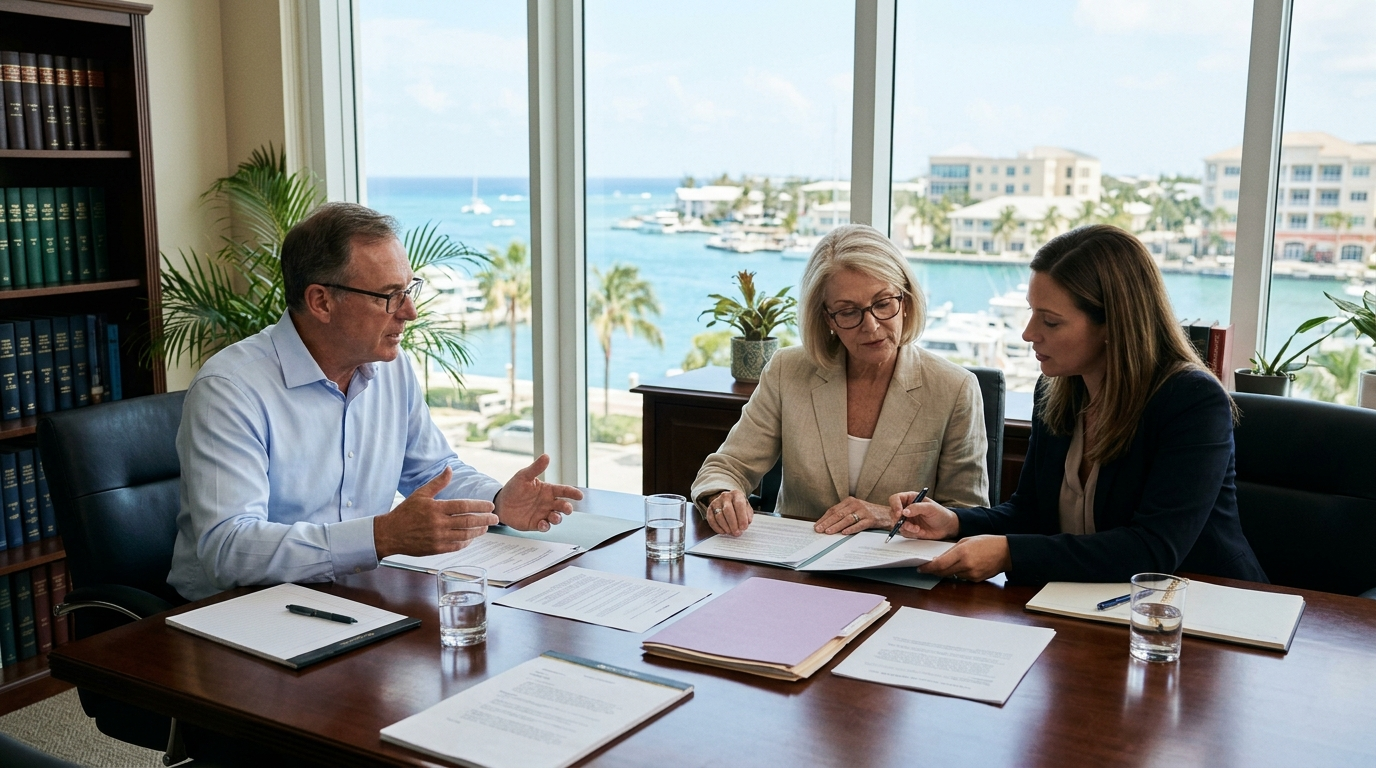
Once the documents are ready, the process follows a clear sequence, and each stage builds on the one before.
- Define your goals and structure: Decide what the trust is for, who the beneficiaries will be, and which powers, if any, you want to reserve as settlor.
- Select a licensed Cayman trustee: A professional trustee licensed by CIMA will manage the trust, so choose one with experience in your type of structure and assets.
- Complete due diligence: The trustee reviews your identity, wealth, and funds before agreeing to act, and this step is often the longest part of onboarding.
- Draft and sign the trust deed: Lawyers prepare the deed to reflect your goals, and it is usually signed remotely, so you generally don't need to travel to Cayman.
- Register as an exempted trust, if applicable: Where the beneficiaries are not Cayman residents, the trust may be registered to obtain a statutory tax undertaking, while the details of the deed generally stay private.
- Fund the trust: Assets are transferred with clear documentation of dates and amounts, which matters if the transfers are ever questioned.
- Maintain ongoing administration: The trustee handles accounts, reporting, and periodic reviews, and you stay in regular contact about changes.
Working through these steps in order, and funding the trust well before any dispute, is what gives the structure its strength. In my experience at Neptune Fiduciaries Group, the biggest delays come from incomplete source-of-wealth evidence, not from the legal drafting.
For professional assistance with establishing a trust or foundation, explore our Trust and Foundation Registration services to understand the available structures and registration process.
Cayman Islands Trust Formation Cost: What to Budget in Cayman Islands Dollars
The real cost of Cayman Islands Trust Formation includes setup, trustee administration, and legal advice, and Cayman is generally at the higher end of the offshore range. The local currency is the Cayman Islands dollar (KYD), pegged at about 1 KYD to 1.20 US dollars, so the figures below are indicative amounts in KYD.
- Initial setup and trust deed drafting: Expect roughly KYD 4,200 to KYD 12,500 or more, depending on the complexity of the structure and the trustee.
- Annual trustee administration fees: Licensed trustees commonly charge around KYD 4,200 to KYD 20,800 or more per year, scaling with the size and activity of the trust.
- Legal and structuring advice: Many clients budget roughly KYD 4,200 to KYD 20,800 or more for tailored advice, especially where tax or succession issues cross borders.
- Due diligence, notarisation, and translations: These typically add a few hundred to a couple of thousand KYD, depending on the documents and countries involved.
- STAR trusts and private trust company structures: These usually cost more to set up and run, because they involve extra entities and ongoing governance.
These figures vary by trustee and complexity, and exchange rates move, so get a written quote before you commit. Fee schedules also change over time, so confirm current numbers with a licensed Cayman trustee.
Understanding What Is Trust Administration Services can help you learn how trusts are managed, assets are administered, and ongoing responsibilities are handled after formation.
Does a Cayman Trust Really Protect Assets From Creditors and Forced Heirship?

A Cayman trust offers meaningful protection, but it isn't a blanket shield. Under Cayman's Fraudulent Dispositions Law, a transfer into a trust can be set aside only if it was made with the intent to defraud an existing creditor, and the creditor has to bring a claim within a limited period after the transfer, commonly cited as six years. The burden of proof rests on the creditor.
For families from civil law countries, the firewall provisions matter too. Cayman's trust legislation generally provides that questions such as forced heirship or certain matrimonial claims are not allowed to undermine a properly established Cayman trust, even if the settlor's home law would say otherwise. That can be an important tool for succession planning.
The limits are just as important. Courts look hard at timing and intent, and transfers made after a problem has appeared are the most vulnerable. At Neptune Fiduciaries Group, I always tell clients that the best protection comes from setting the trust up early, in good faith, with full disclosure to advisers, and confirming the position with qualified counsel.
If you're comparing international trust structures, explore a Mauritius Trust to learn about its formation process and potential benefits for asset management and wealth planning.
How Neptune Fiduciaries Group Supports Your Cayman Islands Trust Formation
At Neptune Fiduciaries Group, we provide Trust Formation support built around your actual goals, not a one-size-fits-all template. We start by understanding what you want to protect, for whom, and when, and we design our Cayman Islands Trust Formation service to match that plan.
Wealth planning rarely involves just one entity, so we also provide Foundation Formation, Offshore Company Formation, and related business services. That helps you build a coherent structure, with the trust, any holding companies, and banking arrangements working together instead of sitting in separate silos.
Our team coordinates the trustee relationship, due diligence, and documentation that most often cause delays, and we help you sequence funding properly. Whether you're planning succession, protecting family wealth, or structuring a business holding, we help you move forward with clear documents and fewer avoidable setbacks.
Start Your Global Business
Journey Today
Whether you're launching a new venture or expanding globally, our experienced advisors provide tailored corporate and banking solutions designed for long-term success.
Conclusion
Cayman Islands Trust Formation gives families and founders access to a respected regulator, a tax-neutral jurisdiction, and a flexible legal toolkit, including reserved powers and STAR trusts. Those features explain why Cayman remains a first choice for complex, institutional-grade wealth planning.
Getting it right comes down to choosing a licensed, experienced trustee, preparing complete due diligence documents, funding the trust in good faith and well before any dispute, and budgeting for the full annual cost rather than the setup fee alone. Clients who plan this way tend to end up with a structure that holds up under scrutiny.
Whichever structure you choose, good guidance at the start turns a complex legal framework into a clear plan, and gives you a credible, well-documented vehicle for protecting and passing on what you've built.
FAQs
What is a STAR trust in the Cayman Islands?
A STAR trust, short for Special Trusts Alternative Regime, is a Cayman trust that can be set up for purposes, for beneficiaries, or for both. It uses an enforcer to make sure the trustee carries out the trust's terms, and it's often used to hold shares in a family business or a private trust company.
Do you need to be a Cayman resident to set up a Cayman trust?
No. Settlors from anywhere in the world can set up a Cayman trust, and most are non-residents. The trust does need a trustee that is licensed in the Cayman Islands, and the process is usually handled remotely.
Can a Cayman trust be used for business succession planning?
Yes. Cayman trusts, especially STAR trusts held through a private trust company, are commonly used to hold family business shares and manage succession across generations. The structure should be designed carefully with legal and tax advice in the relevant countries.
Is a Cayman Islands trust taxed?
The Cayman Islands don't impose income, capital gains, or inheritance tax, so the trust itself isn't taxed there. However, settlors and beneficiaries may still owe tax and have reporting duties in the countries where they live, so take advice before you fund the trust.