Quick Answer
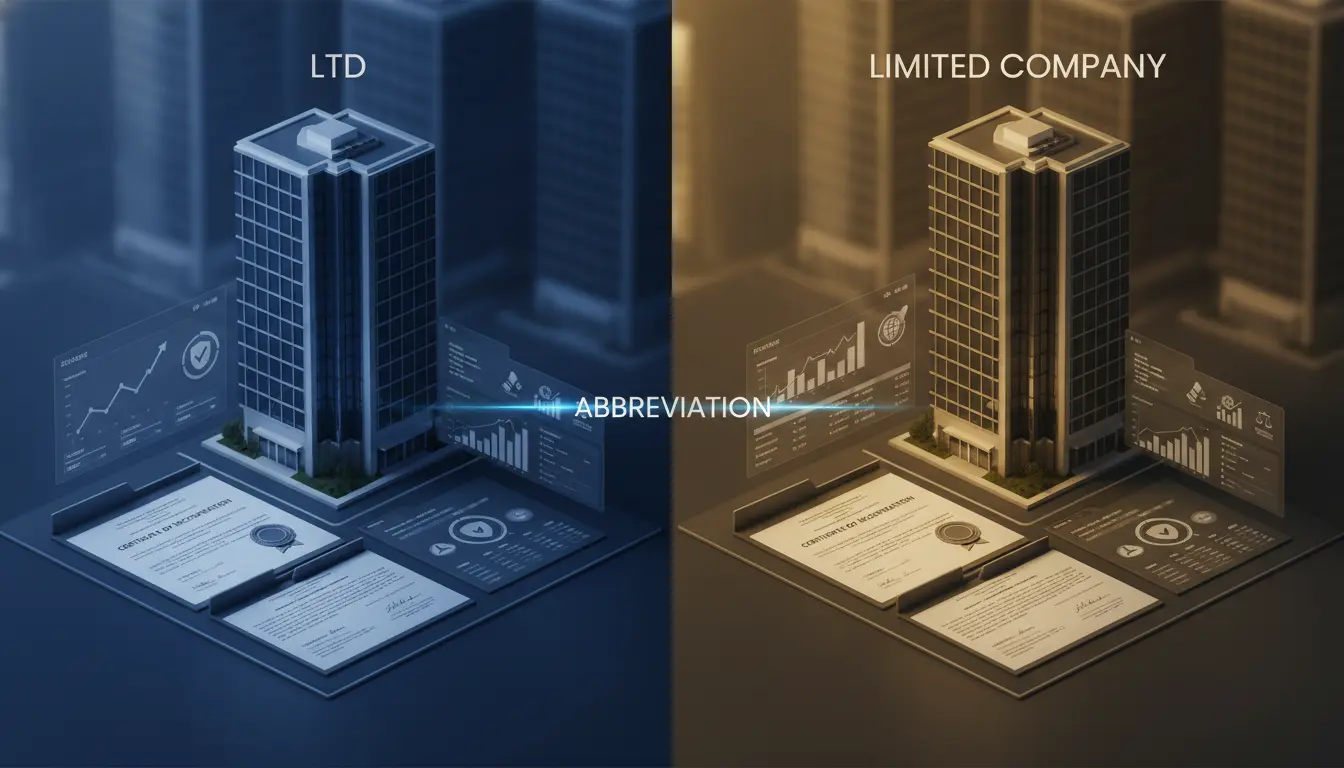
There's no real difference; Ltd and limited company aren't two separate things. "Limited company" is the broad legal category, while "Ltd" is simply the naming suffix used for a private limited company, the most common type. Every Ltd is a limited company, but not every limited company uses "Ltd"; a PLC, for example, uses "PLC" instead.
If you've been researching UK business structures, you've probably run into both terms "Ltd" and "limited company" used almost interchangeably, which is exactly what makes this confusing. So what's the actual difference between LTD and limited company? The short version: less than you'd think, but the details matter more than most articles bother explaining.
I've seen founders second-guess their own paperwork over this, wondering if they registered the wrong type of entity or need to fix their company name. Most of the time, they didn't do anything wrong; they just never had the terminology broken down clearly.
This guide clears that up properly, covering exactly what each term means, where the real distinctions lie, and where founders commonly slip up when naming or registering their company.
Start Your Global Business
Journey Today
Whether you're launching a new venture or expanding globally, our experienced advisors provide tailored corporate and banking solutions designed for long-term success.
What Is a Limited Company?
"Limited company" is the broader umbrella term used to describe any business structure in which owners' liability is limited to what they've invested, as opposed to a sole trader, where personal and business finances aren't legally separated. This liability protection is the entire point of the structure, and it's what makes a limited company fundamentally different from operating as an individual.
Under UK law, there isn't just one type of limited company. The term covers several distinct structures, each with different rules governing ownership, share capital, and how the business may operate. What they all share is the core legal principle: if the business runs into debt or legal trouble, the owners' personal assets generally stay protected.
This is exactly where "Ltd" enters the picture; it's not a separate category of company, but rather the specific abbreviation used for one type of limited company: the private limited company, which happens to be the most common structure by far. Understanding that relationship is the key to untangling the confusion most people run into.
So when someone asks about the difference between LTD and limited company, they're really asking how one specific type (Ltd) relates to the broader category (limited company), and that distinction becomes much clearer once you see the different types laid out side by side, which is exactly what comes next.
Also Know About: International Trade Company Formation: Unlock Global Growth
Types of Limited Companies in the UK
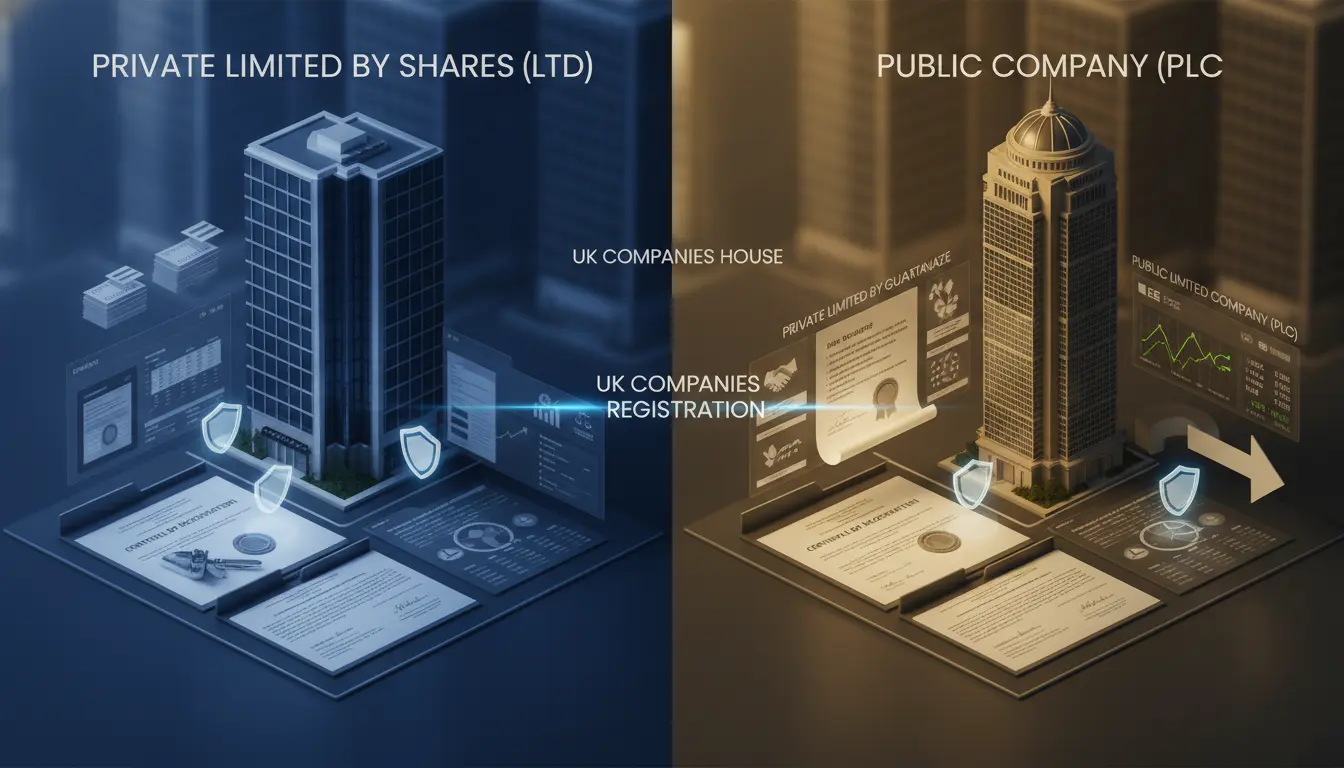
Before the Ltd-versus-limited-company question makes full sense, it helps to see the actual categories that fall under the "limited company" umbrella.
- Private Limited Company (Ltd): The most common structure for small and medium businesses, where shares aren't offered to the public and liability is limited to what each shareholder has invested. This is the type most people mean when they say "Ltd."
- Public Limited Company (PLC): A limited company that can offer shares to the public and is typically listed on a stock exchange, with stricter reporting requirements and a minimum share capital requirement attached.
- Company Limited by Guarantee: Common for non-profits, clubs, and charities, where members' liability is limited to a guaranteed amount rather than shares; there's no share capital involved at all.
- Limited Liability Partnership (LLP): Technically a hybrid rather than a standard limited company, but often grouped in the same conversation since it also limits personal liability for its partners.
- Unlimited Company: A rarer structure where shareholders don't have liability protection at all, usually chosen by professional partnerships that value not having to publicly disclose full financial accounts.
- Community Interest Company (CIC): A limited company built specifically for social enterprises, where profits and assets are locked in to benefit the community rather than being distributed to shareholders.
Every one of these structures falls under the "limited company" label, but only the first one, the private limited company, is the one that actually carries the "Ltd" suffix in its legal name.
Also Know About: Offshore Company Formation: Grow Your Business Globally
Difference Between LTD and Limited Company
Now that the categories are clear, here's where most of the actual confusion lives, and it comes down to just a handful of points.
- "Limited company" is the category. "Ltd" is the label: Limited company describes the entire legal structure with liability protection. Ltd is specifically the abbreviation that appears at the end of a private limited company's registered name.
- Ltd and "Limited" written in full mean the same legal thing: Companies House allows either "Ltd" or "Limited" to appear in a company's registered name; both are legally identical, and the choice is purely stylistic.
- PLCs are limited companies too, but they're never called "Ltd": A public limited company uses "PLC" in its name instead, even though it's still technically a type of limited company under the broader definition.
- The distinction matters most on official documents: Whatever version you register, Ltd or Limited must match exactly on invoices, contracts, and your Companies House filing, since inconsistency can cause compliance issues later.
Once you see it laid out this way, the confusion mostly disappears: every Ltd is a limited company, but not every limited company uses "Ltd"; some use "Limited" in full, and others, like PLCs, use an entirely different suffix altogether.
Also Know About: International Company Formation: Complete Global Guide
Common Mistakes When Naming or Registering Your Company
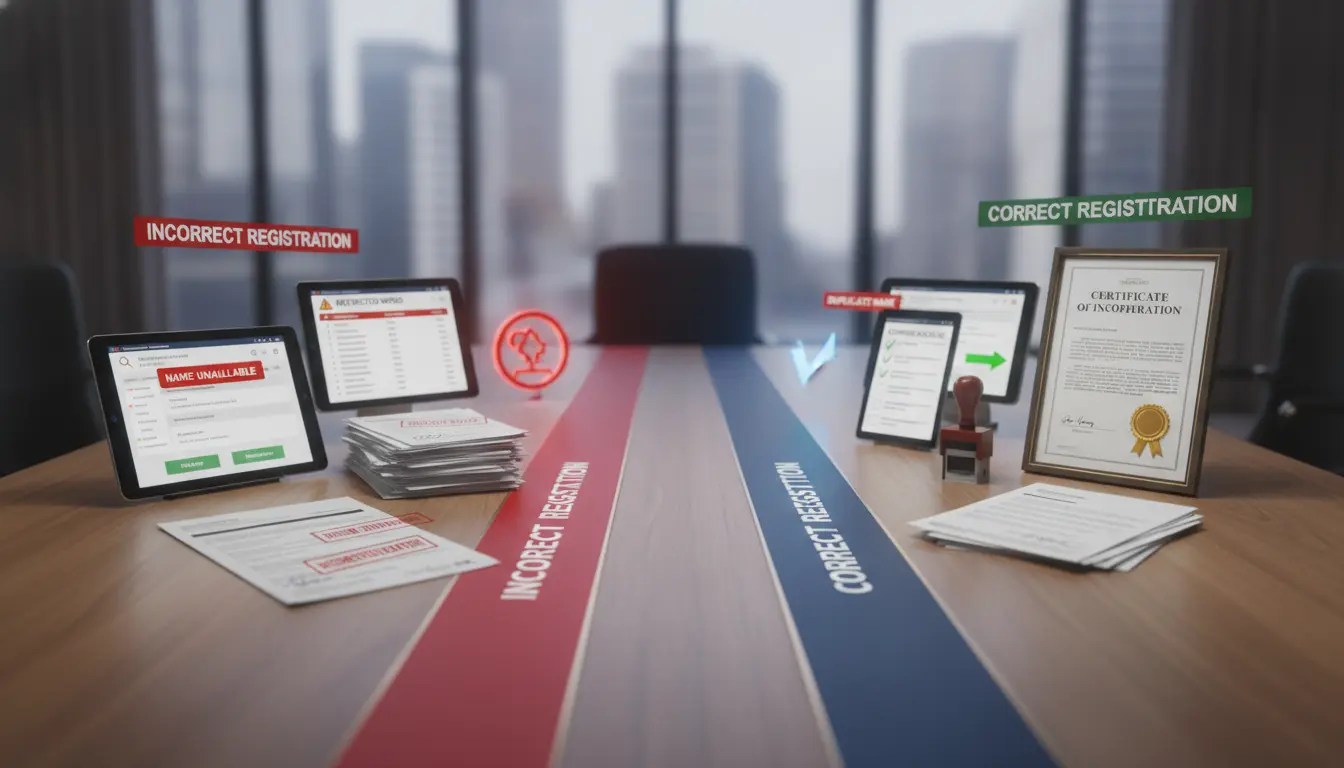
Even with the terminology clear, founders still run into avoidable issues when it comes time to actually register and use their company name.
- Registering with "Ltd" but using "Limited" inconsistently in branding: While both are legally interchangeable, mixing them across your website, invoices, and official filings can create confusion for clients and banks reviewing your documents.
- Assuming "limited company" and "Ltd" are separate registration types: Since Ltd is simply the naming convention for a private limited company, there's no separate application process to worry about; choosing the suffix is part of the same registration.
- Forgetting that the suffix must be included in the legal name: Companies House requires the "Ltd" or "Limited" suffix as part of your registered company name; omitting it isn't optional for a private limited company.
- Overlooking naming rules around restricted words: Certain terms, like "Royal" or "Chartered," require special permission, and using them without approval will get an application rejected regardless of whether you're using Ltd or Limited.
Most of these mistakes come down to treating the naming convention as more complicated than it actually is. Once the suffix is chosen and used consistently, the rest of the registration process is straightforward.
Also Know About: Seychelles Offshore Company Formation: Benefits and Setup Guide
Why Choose Neptune Fiduciaries Group for Company Formation
Understanding the terminology is one thing; getting the actual registration, naming, and documentation right is where founders benefit most from experienced guidance. This is exactly where Neptune Fiduciaries Group comes in, making sure company names, suffixes, and filings are consistent and compliant from the very first submission.
Handling company formation for founders across different industries and jurisdictions daily means seeing naming inconsistencies come up more often than you'd expect: a company registered as "Ltd" but branded as "Limited" everywhere else, or documents that don't match the official Companies House record. These small mismatches can create real friction with banks and partners later.
Whether you're forming a private limited company, exploring a different structure entirely, or simply unsure which naming convention fits your brand, having a formation partner who gets these details right the first time saves the cleanup work that comes from fixing inconsistent paperwork after the fact.
Start Your Global Business
Journey Today
Whether you're launching a new venture or expanding globally, our experienced advisors provide tailored corporate and banking solutions designed for long-term success.
Conclusion
The difference between LTD and limited company ultimately comes down to scope, not substance: "limited company" is the broad legal category that includes several distinct structures, while "Ltd" is simply the naming suffix used specifically for a private limited company, the most common structure by far. Every Ltd is a limited company, but not every limited company carries the Ltd suffix.
Once that relationship clicks, the rest of the confusion around naming, registration, and compliance tends to fall away. Get the terminology right from the start, keep your naming consistent across every document and platform, and the paperwork side of running a limited company becomes far less intimidating than it first appears.
Frequently Asked Questions
Do You Need Ltd in Your Company Name?
Yes, if you're forming a private limited company. Companies House requires either "Ltd" or "Limited" to appear at the end of the registered name, with no option to omit it entirely.
Is Ltd the Same as Limited Legally?
Yes. "Ltd" and "Limited" are legally identical when used in a company name; the choice between the abbreviated and full version is purely a matter of style.
Can I Change from Ltd to Limited After Registering?
Yes, but it requires a formal name change filed with Companies House, since your registered legal name including the suffix must be updated and reflected consistently across all business documents.
Does a Ltd Company's Certificate of Incorporation Show Who Owns the Shares?
No. The Certificate of Incorporation confirms the company's legal existence and registration details, but shareholder information is recorded separately in the company's statement of capital and shareholder register, both filed with Companies House.