Wealth protection is something a lot of people think about but find a daunting task. Whether the valuables to be protected are your savings, a business, or real estate, a loss is devastating. Trust planning combined with asset protection is key to a secure future. With the rise of intelligent money management, the hot topic now is the comparison between domestic vs offshore asset protection trusts.
The most basic definition of a trust is a safe space for your assets. A trust gives you the option of keeping your assets protected either in your home country or outside of it; that is, you are given the choice of investing domestically or investing offshore. There is a good reason for the preference of domestic or offshore; some people want a local option because it is more convenient, but others want to go for the offshore options because of the stronger and more flexible protections offered.
Understanding the differences between domestic vs offshore asset protection trusts is also useful for choosing a trust. The dynamic nature of the financial world makes planning a necessity. A study shows that more than 60% of wealthy people have a trust in place, and a lot of them say it is to keep their assets protected. With or without a business, trust planning in combination with asset protection will allow you to make financially less risky decisions.
What is a Domestic Asset Protection Trust (DAPT)?
A Domestic Asset Protection Trust (DAPT) is a trust set up in your home country to keep your assets safe from risks. You place your property or money into the trust, and it helps provide creditor protection and supports estate planning. In the discussion of domestic vs offshore asset protection trusts, a DAPT is usually the simpler option.
It works under local laws, so it is easier to manage and understand. These U.S.-based trusts or local trusts offer local asset protection while still letting you benefit from your assets. Many people like them because of their domestic trust benefits and easy access.
However, DAPTs may not give the highest level of protection since local courts can still have control. That’s why knowing the difference between domestic vs offshore asset protection trusts is important to make a decision.
Also Explore:
Benefits of Offshore Banking: Boost Your Wealth Globally
What is an Offshore Asset Protection Trust (OAPT)?

A Domestic Asset Protection Trust (DAPT) keeps your assets protected from potential risks and can be set up in your home country. A DAPT trust helps with creditor protection and assists with your estate planning as well. When discussing domestic and offshore asset protection trusts, DAPTs are usually referred to as the more straightforward and simpler option.
Since DAPTs function under your home country’s local laws, they tend to be easier to devise and to work with compared to offshore trusts. Depending on the DAPT provider you work with, these U.S.-based or local trusts will provide you with local asset protection while allowing you to enjoy your assets. DAPT trusts are preferred due to the combination of domestic trust advantages, access, and utility.
That being said you must note that DAPTs may not provide the most optimal protection, as local courts can still exercise jurisdiction over the trusts. Knowing the differences between domestic and offshore asset protection trusts is crucial to making the right decision.
Also Explore:
Trust Corporate Services: Secure Your Business Assets Today
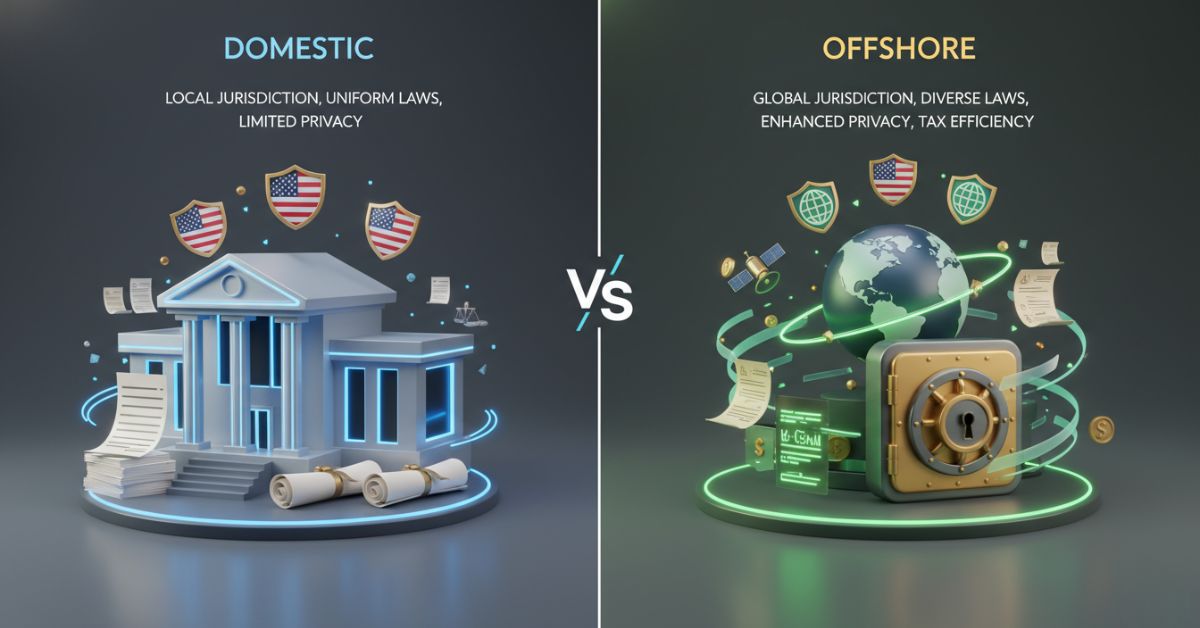
Key Differences: Domestic vs Offshore Asset Protection Trusts Comparison
Note the differences and ramifications between domestic and offshore asset protection trusts to grasp how each functions in the preservation of personal safety. The choice depends on your objectives, the risks involved, and how much protection you actually want. For this analysis, I’m going to break down the mechanisms involved so you will understand what attempts to qualify each strategy and how to align it with your financial objectives.
- Legal Protections and Jurisdictions: Because they manage your assets and operate with the current laws, domestic trusts offer the possibility that your Home country courts still have some jurisdiction over your assets. In contrast, offshore trusts can be established in jurisdictions that have extremely protective asset protection laws, and as a result, they are much better than domestic trusts for protecting assets from legal disputes.
- Creditor Protections: A domestic trust might offer some protection from creditors, but in high-risk situations, this protection may prove to be inadequate. In contrast, offshore trusts that are created in accordance with international trust law systems generally provide greater protection from litigation and financial risk. For this reason, a greater number of wealthy individuals favor the use of offshore trusts.
- Privacy and Confidentiality: Due to domestic reporting regimes and transparency laws, domestic trusts may provide little in the way of secrecy. By contrast, in some of the better-known offshore trust jurisdictions, such as well-known financial havens, offshore trusts offer greater secrecy than do domestic trusts. This contributes to better asset protection, as does less exposure of your financial affairs.
- Cost & Complexity: Typically, domestic trusts are less costly and thus are a great option for a first trust. Offshore trusts, on the other hand, require more expertise and are typically more expensive due to the complexity of the cross-border trust regulations. Still, for the increased cost, the trust offers more protection and flexibility.
- Tax & Compliance Requirements: Domestic trusts are subject to domestic taxation, which is generally easier to work with than offshore trusts, which can provide tax advantages, but the trade-off with offshore trusts is generally more complex reporting and compliance requirements. This is a legal risk that can be more easily managed with the right guidance.
While both options are viable trust planning options, which one is the best for you is really a matter of what your goals and objectives are for the trust. If you want more simplicity and retention of more control, a domestic trust is a good option. If the trust is to provide more security and protection on a global level, an offshore trust is a better option. This is how the differences between domestic and offshore asset protection trusts are.
Also Explore:
Trust and Foundation Registration Services Made Easy
How to Choose the Right Trust for Your Needs

Selecting a trust that will suit your needs is essential for protecting your assets and plans. It can be challenging to determine which is better suited to your plans, a domestic or offshore trust. Trusts can still be selected on the basis of strong asset protection and your target plans, goals, or purpose while taking into account your financial needs and risk appetite. Concerning that, the following points should be kept in mind when choosing a trust:
- Understand Your Risks: How exposed your assets are to legal claims or creditors should be evaluated. A trust for the protection of offshore assets may be beneficial for high-risk trust situations where domestic protection is the opposite. It is essential to understand the risk prior to choosing a destination for your assets.
- Determine Your Objectives: It is important to establish whether you want to control the assets optimize the tax, or secure the wealth for the long term. Without the long-term objectives, a trust cannot be strategically aligned with a domestic or offshore plan.
- Compliance and Legal Issues: It is the case that domestic trusts are generally located and are easier to comply with the trust laws of that location. Trusts situated outside of the country are subject to laws governing cross-border trusts. Managing compliance and control of costs may be more complex than domestic ones.
- Consider Your Privacy: Foreign trusts are better suited to protect your privacy than domestic trusts. This is especially true when privacy is paramount.
- Considering Costs and Complexity of Management: Because of the less bureaucracy involved in domestic trusts, they tend to be less expensive and easier to manage. Offshore trusts have more expensive setup and maintenance costs, but they can be worth the investment for greater protection and more flexibility in complicated financial scenarios.
Ultimately, the different trusts for different needs framework is articulated in the balance it offers between asset protection planning, which often needs to be complemented with financial planning. Knowing the difference between domestic and offshore asset protection trusts gives you the ability to protect your capital and worry less about it, giving you the ability to plan for the future with more freedom.
Why Choose Neptune Corporate for Trust and Asset Protection Services
When establishing a trust or safeguarding your assets, selecting a suitable partner is essential. Neptune Corporate offers specialized planning for both onshore and offshore structures. They simplify and secure planning for asset protection. Their clients feel confident navigating the trust registration and wealth management . They know the intricate legal and financial structures.
Offshore company establishment , registered agent, and accounts are full services for international and national trusts. Neptune Corporate offers a wonderful combination of legal and constructive compliance and efficiency in meeting the financial goals of clients in trust
Neptune Corporate is unique in its personalized service. They create individualized plans for cross-border trust, tax, and estate protection planning. With their assistance, you will easily understand the differences between domestic and offshore and the related ass
Conclusion
Understanding the intricacies of domestic and offshore trusts illustrates that safeguarding your assets involves thorough consideration and strategic decision-making. Domestic vs offshore asset protection trusts. Domestic trusts are less complex than offshore trusts, but the latter provide better protection, stronger privacy, and worldwide options. Your goals, risk appetite, and strategy horizon are important in determining what’s best for you.
Neptune Corporate expert services will assist you in making the best choices, completing the appropriate trust arrangements, and protecting your assets. Comprehending the distinctions between domestic vs offshore asset protection trusts enables you to protect your assets for today and generations to come.Neptune Corporate’s expert services assist clients in making optimal trust arrangements and protecting assets. Knowing the distinctions between domestic vs offshore asset protection trusts enables protection of wealth today and for future generations.