Quick Answer
A Hong Kong Crypto License is authorisation from the SFC (VATP licence for exchanges) or HKMA (SVF licence for payment services). It requires genuine substance, minimum paid-up capital of around HKD 5 million, licensed responsible officers, and a real AML/custody framework, making it credible but demanding to obtain.
If you're researching a Hong Kong Crypto License, you've probably noticed the city has repositioned itself as one of Asia's most active crypto hubs in recent years, after a period of tighter restrictions. That shift matters, because the regulatory groundwork is now genuinely built for licensed, institutional-grade crypto businesses.
At Neptune Fiduciaries Group, I've worked with founders who assumed Hong Kong's crypto rules were still as restrictive as a few years ago, only to discover a dedicated licensing regime now exists specifically for virtual asset trading platforms.
This guide covers what the licence actually involves, why founders are choosing Hong Kong again, the different licensing routes available, and what it realistically costs and takes to get approved.
Start Your Global Business
Journey Today
Whether you're launching a new venture or expanding globally, our experienced advisors provide tailored corporate and banking solutions designed for long-term success.
What Makes Hong Kong Attractive for Crypto Founders
Hong Kong's regulators, the Securities and Futures Commission (SFC) and the Hong Kong Monetary Authority (HKMA), have built a licensing framework specifically designed to bring virtual asset trading platforms (VATPs) into a regulated, transparent structure. This regulatory clarity gives founders a defined rulebook to work with rather than ambiguity about what's permitted.
Hong Kong's position as an established international financial centre reinforces that appeal. Decades of experience regulating banking, securities, and asset management give the city genuine institutional credibility, and a licensed crypto business here benefits from that reputation when dealing with banks and investors. Access to Mainland China-adjacent capital and Asian institutional investors is another significant draw.
Hong Kong sits at a genuinely unique crossroads, giving licensed firms exposure to regional capital flows and client bases that are harder to reach from most other jurisdictions. Combined with a simple corporate tax system and a business environment built around international finance, these factors explain why serious crypto businesses are returning to Hong Kong. However, success here starts with understanding which licence applies to your business.
If cost is a key consideration, exploring the Cheapest Crypto License options can help you compare jurisdictions and identify a licensing route that fits your budget.
Types of Crypto Licences Available in Hong Kong
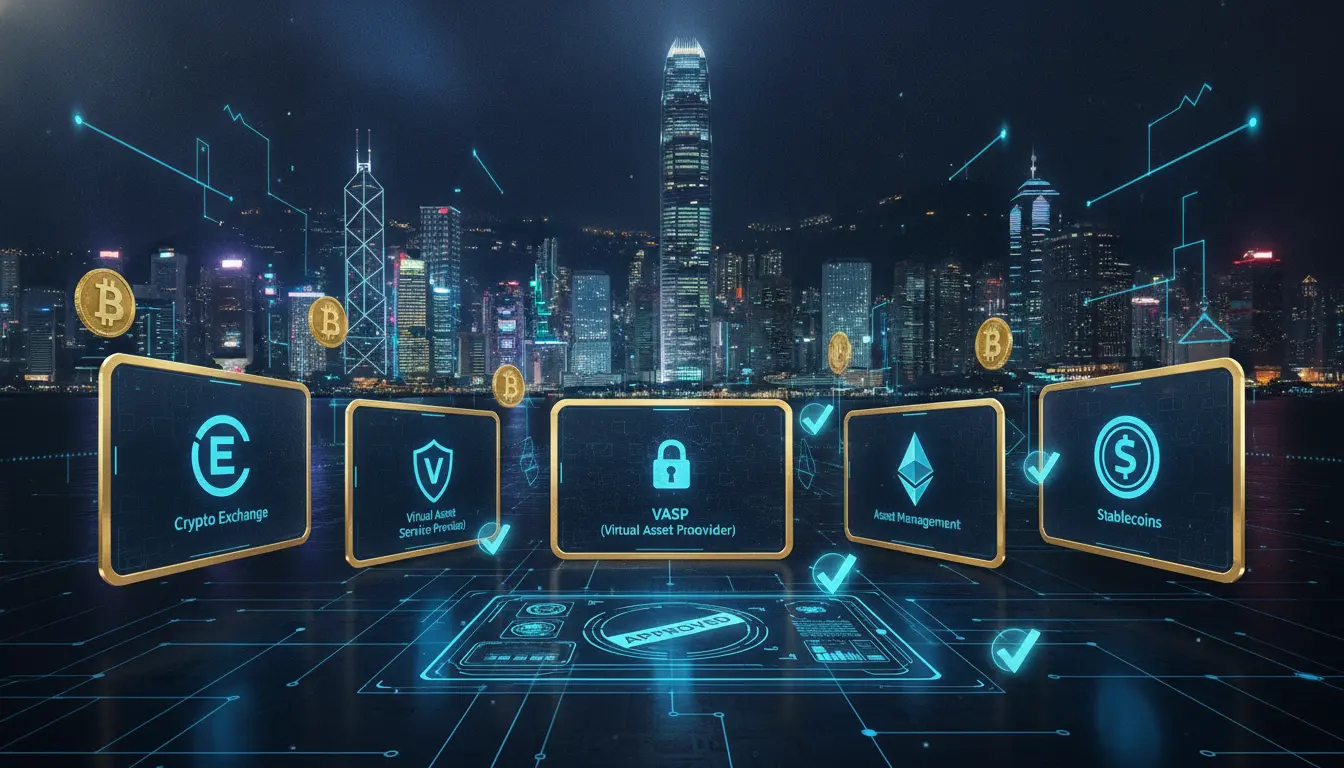
Hong Kong doesn't offer a single generic crypto licence. Which authorisation you need depends heavily on what your business actually does with client assets.
- VATP licence under the SFC: This covers virtual asset trading platforms, meaning centralized exchanges offering trading services to retail and institutional clients, regulated under Hong Kong's dedicated virtual asset framework.
- Type 1 licence (dealing in securities): Relevant for firms whose crypto activities involve dealing in tokens that qualify as securities under Hong Kong law.
- Type 9 licence (asset management): Applies to firms managing crypto or virtual asset funds on behalf of clients, treated under the same regime as traditional asset managers.
- Stored value facility (SVF) licence: Issued by the HKMA, this applies to firms offering payment-related stored value products, which becomes relevant for certain crypto payment services.
Each of these categories comes with its own capital, compliance, and reporting obligations, so confirming which one actually matches your business model is the first real decision in this entire process.
Businesses planning to enter the digital asset industry can also explore Cryptocurrency Business Licensing to understand the regulatory requirements for operating legally across different jurisdictions.
Requirements to Get a Hong Kong Crypto License
Hong Kong's regulators expect genuine substance behind an application, not just completed paperwork.
- A properly incorporated Hong Kong entity: Applicants need a locally registered company, since licences are issued to Hong Kong-based entities rather than foreign firms operating remotely.
- Minimum paid-up capital: VATP applicants must maintain minimum capital requirements set by the SFC, with the exact threshold depending on the scope of activities.
- Fit and proper responsible officers and directors: The SFC reviews the background, experience, and integrity of key personnel closely before granting approval.
- A licensed responsible officer overseeing operations: At least one responsible officer needs relevant industry experience and regulatory approval to hold that role.
- A documented AML/CFT and risk management framework: Genuine anti-money laundering controls, custody arrangements, and cybersecurity safeguards need to be built and evidenced.
- Segregation of client assets: Client funds and digital assets must be kept separate from the company's own operational assets, a core investor protection requirement.
Meeting these requirements properly before submission is what determines whether the SFC engages seriously with your application or sends it back for revision.
If you are considering launching a regulated digital asset platform, learning how to get a Crypto Exchange License can help you understand the licensing process and key regulatory requirements.
Step-by-Step Process to Get a Hong Kong Crypto License
Getting licensed follows a defined sequence, and Hong Kong's regulators expect real preparation at each stage.
- Incorporate your Hong Kong entity: This is the foundational step, since the SFC licenses a properly established local company.
- Determine the correct licence category: Confirm whether your business needs a VATP licence, a Type 1 or Type 9 licence, or an SVF licence based on your actual activities.
- Build your compliance and risk management framework: This includes AML/CFT policies, custody arrangements, and cybersecurity measures the SFC expects to see fully developed.
- Appoint qualified responsible officers and directors: These appointments are reviewed closely, so genuine relevant experience matters significantly.
- Submit your formal application to the SFC: This includes corporate documents, your business plan, compliance manuals, and proof of minimum capital.
- Respond to SFC queries during review: The regulator often requests clarifications or additional evidence, and thorough responses directly affect your approval timeline.
- Receive licence approval and begin operations: Once granted, ongoing compliance obligations, including reporting and audits, begin immediately.
Following this sequence with genuine substance at every stage, rather than rushing early steps, is what actually moves an application through Hong Kong's review process.
Businesses comparing different jurisdictions can also explore Which Country Is Best for Crypto Exchange License to understand how licensing requirements, costs, and regulatory frameworks vary between countries.
Breaking Down the Real Cost of a Hong Kong Crypto License

The real cost of a Hong Kong Crypto License extends well beyond the SFC's application fee, and most of the expense sits in capital, compliance staffing, and professional support.
| Cost Item |
Indicative Range (HKD) |
| SFC application fee |
Roughly HKD 10,000 to 50,000, depending on licence type |
| Minimum paid-up capital |
From roughly HKD 5 million upward for VATP licences |
| Company incorporation and setup |
HKD 15,000 to 50,000+, depending on service provider |
| Compliance officer and AML staffing |
HKD 40,000 to 100,000+ per month, lower if partially outsourced |
| Legal and compliance consulting |
HKD 300,000 to 800,000+ for full application preparation |
| Annual audit and reporting |
Recurring annual cost, varying by firm size and activity |
The SFC's own fees are relatively modest compared to the total investment required. Minimum capital and genuine compliance infrastructure are what actually drive the budget, so plan for the full first-year cost rather than the application fee alone. These figures are indicative, and regulators update fee schedules periodically, so confirm current numbers directly with the SFC before finalising your budget.
Before choosing a jurisdiction, it is also useful to understand how much a crypto license costs, including the licensing fees and other expenses involved in setting up a compliant crypto business.
Should Your Crypto Business Actually Set Up in Hong Kong?
For firms targeting institutional clients, Asian capital markets, or a base with genuine proximity to Mainland China, Hong Kong is often a strong fit. The SFC's VATP licence functions as a real trust signal, particularly valuable for firms building long-term relationships with banks and institutional investors.
It's a harder fit for early-stage projects with limited capital or founders hoping for a fast, low-cost route to market. The minimum capital requirements, responsible officer obligations, and genuine compliance substance make Hong Kong a serious commitment rather than a lightweight offshore alternative.
The right decision depends on your target market, your business model, and your available capital. Choose Hong Kong when regulated credibility and Asian institutional access are genuine commercial priorities, and go in with realistic expectations about both the cost and the review timeline involved.
How Neptune Fiduciaries Group Supports Your Hong Kong Crypto Licensing
At Neptune Fiduciaries Group, we provide Crypto Licensing support built around exactly what Hong Kong's regulators expect to see, starting with confirming the correct licence category for your business model before any application work begins. We help structure the entity, capital position, and compliance framework so your submission reflects genuine substance from the outset.
Because Hong Kong Crypto licensing sits alongside broader company structuring decisions, we also provide Offshore Company Formation and related business services, ensuring ownership, holding structures, and banking relationships are coherent rather than assembled piecemeal later in the process.
Our team works directly on the AML/CFT policies, custody arrangements, and responsible officer documentation that most often trigger regulator follow-up queries. Whether you're launching a VATP exchange or a token-based asset management business, we guide you through the review process so your application moves forward with fewer avoidable delays.
Start Your Global Business
Journey Today
Whether you're launching a new venture or expanding globally, our experienced advisors provide tailored corporate and banking solutions designed for long-term success.
Conclusion
A Hong Kong Crypto License offers genuine regulatory credibility, access to Asian institutional capital, and a rebuilt licensing framework specifically designed for virtual asset businesses, but it demands real capital, genuine compliance substance, and patience through a thorough regulatory review. This isn't a shortcut licence; it's a serious regulatory commitment.
Getting it right comes down to choosing the correct licence category, building an authentic AML and custody framework rather than a paper one, and budgeting for the full first-year cost rather than the application fee alone. Founders who prepare properly tend to move through Hong Kong's review process far more smoothly than those who underestimate what's actually required.
Whether you're building a trading platform, a token fund, or a payment-related crypto service, the right guidance from the start turns a genuinely demanding process into a manageable one, and positions your business as a credible, long-term player in Asia's digital asset market.
FAQs
Is crypto legal in Hong Kong?
Yes. Owning and trading crypto is legal in Hong Kong, but businesses offering virtual asset trading, dealing, or management services must be licensed under the relevant SFC or HKMA framework.
Does Hong Kong regulate crypto exchanges?
Yes. Virtual asset trading platforms operating in Hong Kong must hold a VATP licence from the Securities and Futures Commission, which covers centralized exchanges offering trading services to clients.
How much does a crypto license cost in Hong Kong?
Costs vary by licence type, but VATP applicants should budget for minimum capital starting around HKD 5 million, alongside application fees, compliance staffing, and legal consulting that together often push the first-year investment into seven figures.